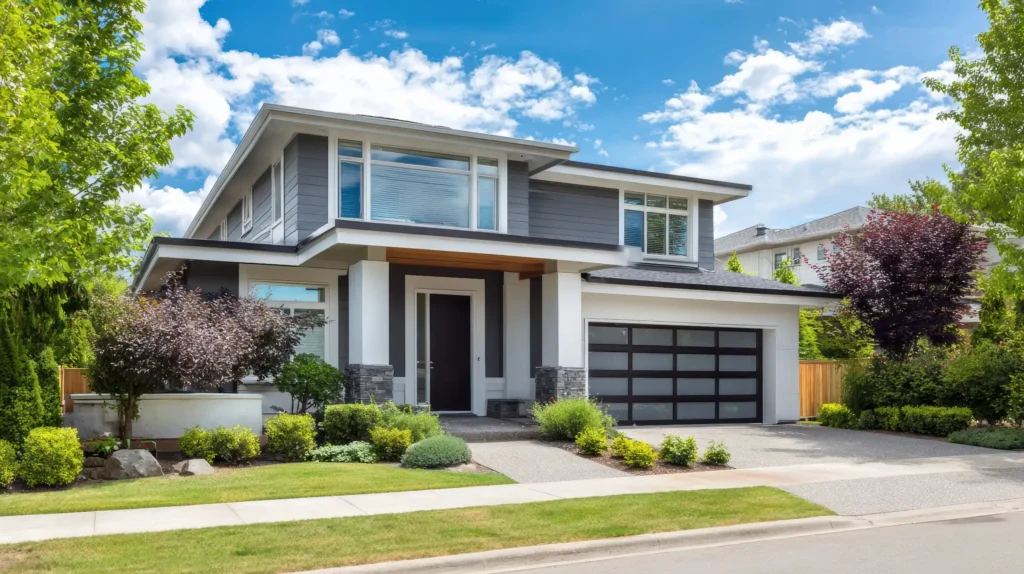

Buying a condo just because it’s near an MRT station is the fastest way to overpay in the current Singapore market. You’ve likely seen OCR prices climb toward S$2,100 psf and felt the sting of uncertainty. It’s a common fear. Nobody wants to buy at the peak only to watch their capital stagnate for a decade. You want an asset that fuels your progression, not a liability that drains your savings. Many investors felt this same hesitation back in 2019, yet those who understood the specific entry-price mechanics of Midwood are now sitting on gains that others missed.
We’re going to unlock the exact investment thesis that turned this Hillview project into a suburban success story. You’ll master a repeatable blueprint to identify high-growth opportunities without falling for marketing fluff. We’ll strip away the confusion regarding rental yields and show you how to calculate real-world returns that actually hit your bank account. By the end of this guide, you’ll have the confidence to execute smart suburban buys that secure your financial future in 2026 and beyond. We’re sharing the insider knowledge you need to avoid expensive mistakes and build a portfolio that generates genuine passive income.
Key Takeaways
- Master the “Entry Price” rule to secure your profit margin from day one by learning how to evaluate entry psf against future resale potential.
- Analyze the specific investment thesis behind midwood to understand the frameworks that transformed this Hillview project into a suburban success story.
- Apply proven frameworks like the “10-Minute Walk Rule” and URA Master Plan checks to identify high-growth opportunities before the market reacts.
- Protect your portfolio from expensive mistakes by learning how to conduct a “Supply Overhang” check using upcoming Government Land Sales (GLS) data.
- Unlock the blueprint for asset progression and discover how to transition from residential units to high-yield commercial or industrial assets for a robust 2026 strategy.
Understanding Midwood: Why This Hillview Project Matters in 2026
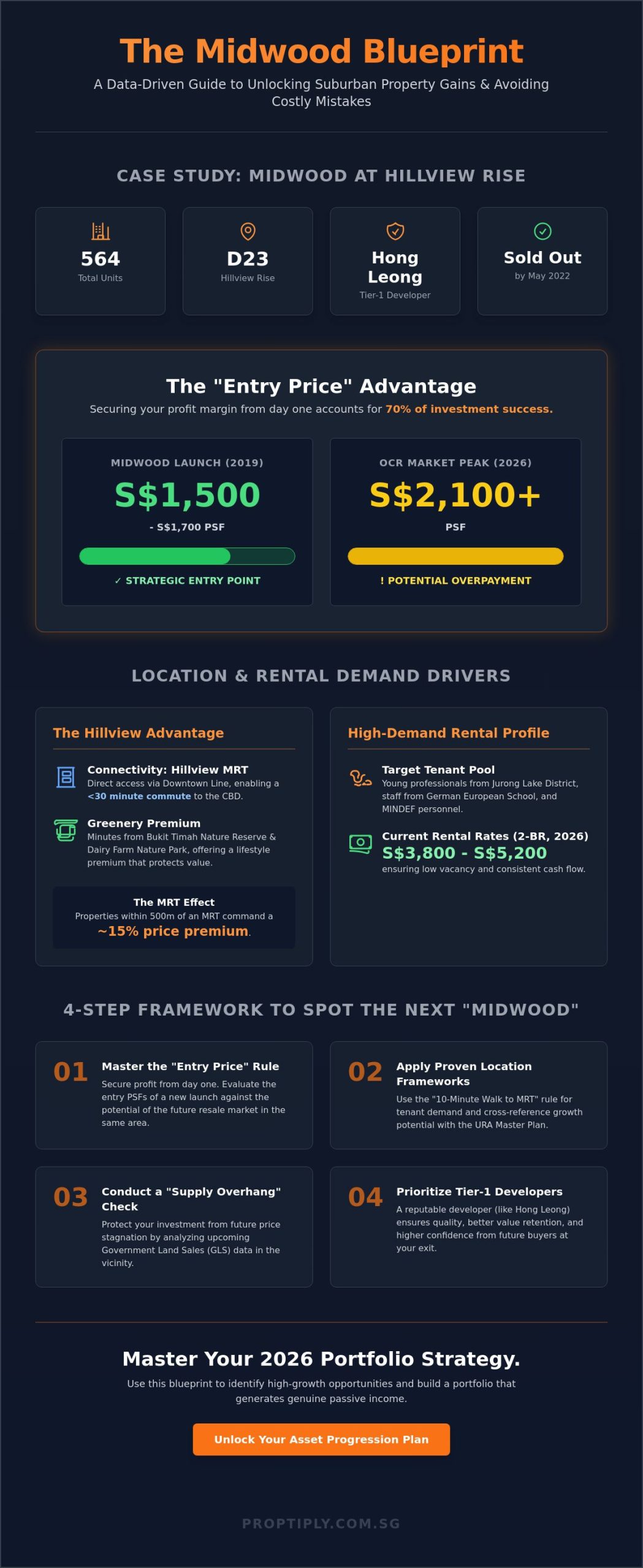
Midwood is a 564-unit luxury condominium located at Hillview Rise, developed by the industry heavyweight Hong Leong Holdings. By 2026, this project has transitioned from a promising new launch into a critical benchmark for the Outside Central Region (OCR) market. Investors prioritize this development because it represents a specific shift in how Singaporeans value suburban living. The area of Hillview, Singapore has evolved from a quiet residential enclave into a high-demand investment hotspot, driven by a desire for space and serenity without sacrificing connectivity.
The “Sold Out” status of midwood wasn’t just a marketing win; it was a signal of market absorption that savvy investors must study. The project reached full capacity by May 2022, which created a solid price floor for the entire district. Most generic project reviews fail to tell the real story of capital growth because they focus on surface-level aesthetics. They miss the data-driven reality of how supply crunches in the OCR during the early 2020s forced prices upward, making early entries into projects like this a masterclass in asset progression. If you want to unlock true wealth, you need to look past the floor plans and analyze the entry price versus the current resale volume.
The Strategic Location of Hillview Rise
Proximity to the Hillview MRT station on the Downtown Line is the primary driver for tenant demand in this sector. Professionals working in the Bugis or CBD areas can commute in under 30 minutes, providing a massive pool of potential renters for midwood owners. Beyond the commute, the greenery premium is a significant value protector. Residents live minutes away from Bukit Timah Nature Reserve and Dairy Farm Nature Park, offering a lifestyle that crowded urban districts cannot match. By 2026, the “MRT Effect” ensures that OCR properties within a 500-meter radius of a station command a price premium of at least 15% over their less connected counterparts.
Developer Reputation: The Hong Leong Factor
Hong Leong Holdings brings a level of prestige that acts as a long-term shield for your investment. Smart investors prioritize Tier 1 developers because their track record ensures high-quality finishes and disciplined facility management. This is a defensive asset strategy. When the market gets volatile, properties with superior maintenance hold their value better and attract higher-quality tenants. You want a developer whose name gives future buyers confidence during your exit stage. Choosing a project with this pedigree is how you avoid expensive mistakes and secure a reliable blueprint for passive income.
The Midwood Investment Thesis: Entry Price vs. Appreciation
The foundation of any successful property play starts with the entry price. When midwood launched at approximately S$1,500 to S$1,700 psf, it established a competitive benchmark for District 23. By 2026, these entry levels look increasingly attractive as newer suburban launches in the Outside Central Region (OCR) push past the S$2,100 psf mark. Getting in early at the right price accounts for 70% of your investment success. This is a core tenet of our methodology. To understand how we categorize such assets, we use the quadrant to determine if a project serves as a high-yield cash cow or a capital appreciation engine based on its price entry point and location maturity.
Rental demand in Hillview is driven by a specific demographic of tenants. You’ll find young professionals from the nearby Jurong Lake District, staff from the German European School Singapore, and even personnel from the Ministry of Defence. These tenants are typically paying between S$3,800 to S$5,200 for two-bedroom units in the current 2026 market. This consistent demand ensures that vacancy rates remain low, provided the unit is managed with a professional touch.
Capital Growth Drivers in District 23
Midwood holds a distinct advantage over older neighbors like Hillview Heights. While older projects offer larger floor plates, they often suffer from age-related friction where maintenance costs rise and rental appeal dips. Analysis of URA private property market data shows that the premium for young resale condos in the OCR remains resilient even during market shifts. This “newness” allows landlords to command rental premiums of 15% to 20% over 20-year-old developments in the same vicinity. Between 2024 and 2026, cooling measures have stabilized the market, making these OCR condos a defensive pick for HDB upgraders and investors who prioritize stability over speculation.
Positive Cash Flow Potential
Achieving a net yield requires a disciplined look at the numbers after accounting for property taxes and maintenance fees. For a standard unit, the rental market might offer a 3.2% gross yield. However, savvy investors use the co-living model to hack these returns. By optimizing the internal layout and catering to the growing demographic of single professionals, you can drive yields significantly higher. You can explore these co living singapore strategies to turn a standard unit into a high-performance asset. If you want to master these calculations, joining a property investment workshop can help you avoid expensive mistakes and secure your passive income stream.
Comparative Analysis: Midwood vs. Other Suburban Launches
Success in the Outside Central Region (OCR) isn’t guaranteed by just buying any new launch. While some projects stagnate due to poor timing or location, midwood has shown resilience because it avoids the “supply overhang” trap. We analyze Government Land Sales (GLS) data to ensure a location isn’t becoming oversaturated with identical units. In the Hillview area, land parcels are released strategically, which helps protect your capital appreciation. Many investors fail because they buy for lifestyle reasons like a nice view or a fancy gym. If you want positive cash flow, you must focus on the math. The 1 and 2-bedroom units in this development serve a specific niche of young professionals and small families who value the proximity to the Downtown Line and local tech hubs.
Understanding Singapore’s Long-Term Plan is vital for any serious investor. This strategic vision outlines how infrastructure like the Rail Corridor transformation and the deepening of the Jurong Lake District will support property values in District 23 through 2026. This isn’t just abstract theory; it’s about aligning your portfolio with the state’s vision for decentralization and urban rejuvenation.
Midwood vs. Dairy Farm Residences
Investors often compare Midwood with Dairy Farm Residences. While Dairy Farm is mixed-use, Midwood offers a more exclusive residential feel while sitting right next to the established HillV2 mall. Purely residential projects often maintain better long-term value because they don’t face the foot traffic and maintenance complexities of integrated retail components. One secret weapon for Midwood is its massive on-site childcare centre. This facility acts as a magnet for family tenants, ensuring high occupancy rates and steady rental income. It’s a pragmatic feature that converts a simple condo into a high-demand asset for working parents.
The Exit Strategy: Who is the Future Buyer?
Your exit strategy shouldn’t be a mystery. The future buyers for these units are the HDB upgraders from nearby Bukit Batok and Choa Chu Kang. As HDB resale prices in these estates reached new peaks in 2024, these owners are actively looking for asset progression opportunities in familiar territory. They want the condo lifestyle without leaving the West. You’re effectively selling to a pool of buyers who are already cashed out and ready to move up the property ladder. Understanding how the october bto 2024 launch reshaped HDB supply and MOP timelines is critical to forecasting exactly when this wave of upgraders will enter the resale condo market. Building a sustainable estate requires a clear exit plan that identifies exactly who will buy your property five to ten years from now.
Practical Guidance: How to Spot the “Next Midwood”
Stop guessing where the market is headed. Finding a high-performing asset like midwood requires a systematic filter, not a gut feeling. Use these four frameworks to validate your next move before you commit your hard-earned capital.
- The 10-Minute Walk Rule: If a project is more than 800 meters from an MRT station, you’re losing the convenience premium. Midwood sits within a five-minute stroll to Hillview MRT. That’s the gold standard for resale liquidity.
- The URA Master Plan Check: Never buy based on what exists today. Buy for what’s coming in 2030. Check for upcoming commercial hubs or school relocations that drive long-term demand.
- The Rental Demand Heatmap: Identify properties within a 15-minute commute to major employment nodes like the Jurong Lake District or One-North. High-tenant concentration ensures your mortgage is covered.
- The PSF Gap Analysis: Compare the entry price of your target against 10-year-old resales in the same district. If the price gap is under 15%, you’ve found a built-in safety margin for capital growth.
Utilizing the URA Master Plan
Read the maps to identify “transformation” zones before the mass market arrives. Look at how tel stage 4 is currently reshaping the East Coast investment landscape. By comparing these transit developments to West-side infrastructure, you can spot where the next capital appreciation wave will hit. Focus on areas where the government is rezoning industrial land into residential or mixed-use plots for 2026. This is how you unlock “first-mover” advantage in the Outside Central Region (OCR).
Financial Readiness for OCR Investing
Success depends on your math, not just the location. In 2026, your Total Debt Servicing Ratio (TDSR) remains capped at 55%. If you’re a Singaporean buying a second investment property, that 20% ABSD liability is a significant hurdle. Decoupling often becomes a necessary strategy to free up one name and legally avoid the tax. Watch out for “Budget Creep” when looking at luxury suburban condos. If the entry price pushes your loan-to-value ratio too high, the interest costs will eat your positive cash flow. Stick to the numbers that protect your downside.
Ready to build your passive income stream? Learn how to master the Singapore property market with our proven investment blueprints.
Beyond Midwood: Mastering Your 2026 Portfolio Strategy
Your analysis of midwood is a vital first step, but it’s only one piece of a much larger puzzle. To achieve true financial freedom, you need to think beyond individual units. You must focus on building a resilient real estate estate that generates consistent cash flow regardless of market cycles. In the 2026 property climate, asset progression isn’t just a buzzword; it’s a survival strategy for the modern investor.
Transitioning from residential properties to commercial or industrial assets is often where the real wealth acceleration happens. While residential units like midwood provide stability and capital appreciation, industrial properties frequently offer higher rental yields, often ranging between 5% and 7%. This diversification balances your portfolio, providing a safety net against cooling measures like the Additional Buyer’s Stamp Duty (ABSD) that primarily target the residential sector.
Execution is everything. Moving from “buying a house” to “executing a blueprint” requires a shift in mindset. You need a system that works while you sleep. This is why professional property management singapore is essential. It transforms a high-maintenance asset into a source of genuine passive income. Don’t waste your time handling tenant disputes or maintenance emergencies. Let the experts protect your yield while you focus on finding your next deal.
Avoiding the “Expensive Mistakes” of DIY Investing
Many investors follow the crowd into popular projects without a clear exit plan. This herd mentality often leads to overpaying or buying into low-demand areas. Adopting i quadrant thinking allows you to evaluate properties based on hard data and proven frameworks rather than emotions. A single 1-on-1 consultation can save you upwards of S$150,000 in potential losses by identifying hidden risks in your financial roadmap before you sign the Option to Purchase.
Your Next Steps to Financial Freedom
Success in the Singapore market isn’t a solo journey. It requires a community of like-minded investors who share insider knowledge and boots-on-the-ground insights. Our Residential Acceleration Program is designed to move you from a state of curiosity to a state of readiness. We provide the tools, the network, and the proven methodology to help you scale your portfolio with confidence.
Stop guessing and start strategizing.
Unlock your property investment potential with a Proptiply consultation today.
Take Control of Your Property Portfolio Strategy
Navigating the 2026 market requires more than just following the crowd to the latest launch. Successful investors recognize that midwood served as a masterclass in timing the Hillview transformation, proving that entry price and location synergy are the ultimate drivers of capital appreciation. You’ve seen how specific OCR projects can outperform when you apply a disciplined framework instead of relying on guesswork. The real secret to long-term wealth in Singapore’s real estate landscape lies in diversifying into high-yield niches like co-living and industrial spaces that generate consistent positive cash flow.
Don’t leave your financial freedom to chance. Start learning from practitioners who’ve already paved the way. Our founders, Jelene Lum and Ervin Ang, have empowered over 1,000 students to master the market using proven, real-world systems. Whether you’re looking to optimize your residential assets or break into specialized commercial sectors, having a protective guide ensures you avoid expensive mistakes. It’s time to unlock the same blueprint that’s transformed hundreds of portfolios across the island. Your path to a secure, passive income stream is logical and attainable when you have the right mentorship.
Master the Singapore Property Market: Join Our Next Bootcamp
You have the potential to build a lasting legacy through smart property moves. Let’s make your 2026 investment goals a reality together.
Frequently Asked Questions
Is Midwood still a good buy in the resale market in 2026?
Midwood remains a strategic buy in 2026 because it sits at a sweet spot of modern tenure and competitive entry price compared to 2024 launches. You’re looking at a development that has already crossed its initial price discovery phase. Use our proven framework to compare its S$ psf against newer District 23 neighbors to ensure you’re entering at a safe margin.
What is the average rental yield for a 2-bedroom unit in Midwood?
You can expect an average gross rental yield of 3.4% to 3.7% for a 2-bedroom unit in the Hillview area in 2026. This performance is driven by steady demand from professionals working in the Jurong Lake District and the nearby German European School Singapore. Focus on units with efficient layouts to maximize your S$ per square foot rental income.
How does the Hillview MRT proximity affect Midwood’s capital appreciation?
Midwood’s 400 meter distance from Hillview MRT provides a solid floor for its capital appreciation and resale liquidity. Data from the last decade shows that Singapore properties within a 5 minute walk of a Downtown Line station have outperformed those further away by roughly 12%. This proximity ensures your asset remains attractive to both tenants and future HDB upgraders.
Who is the developer of Midwood and what is their track record?
Hong Leong Holdings developed the project, bringing over 50 years of expertise to the Singapore real estate market. They’ve a proven track record with successful projects like Penrose and One-North Eden. Buying from a Tier 1 developer minimizes your risk regarding construction quality and long term maintenance, which are critical factors for your exit strategy.
What are the main differences between Midwood and Dairy Farm Residences?
The primary difference lies in MRT accessibility versus integrated convenience. Midwood is just 400 meters from Hillview MRT, whereas Dairy Farm Residences is nearly 1 kilometer away but offers an integrated retail mall. If your goal is high rental demand from commuters, Midwood is the superior choice. If you prioritize doorstep amenities, Dairy Farm Residences takes the lead.
Are there any upcoming developments in the URA Master Plan that will affect Midwood?
The 2019 URA Master Plan’s focus on the Rail Corridor and the transformation of the nearby Beauty World precinct will directly boost Midwood’s long term value. These enhancements create a lifestyle moat that attracts high quality tenants. Follow the blueprint of investing near government planned rejuvenation zones to capture the next wave of capital growth in District 23.
Is Midwood suitable for a co-living investment strategy?
Midwood is an excellent candidate for a co-living strategy if you target the larger 3-bedroom or 4-bedroom layouts. By applying our specialized co-living framework, you can unlock higher cash flow compared to traditional whole unit rentals. The proximity to the Downtown Line makes it a magnet for young professionals who want a premium lifestyle without the Orchard Road price tag.
What should I look for in a property consultant before buying into District 23?
Choose a consultant who is an active investor themselves and can show you a 5 year exit plan backed by real time transaction data. They shouldn’t just talk about potential but provide a clear blueprint for asset progression. Ensure they understand the specific nuances of the Hillview enclave so you don’t make an expensive mistake with a sub-optimal unit choice.