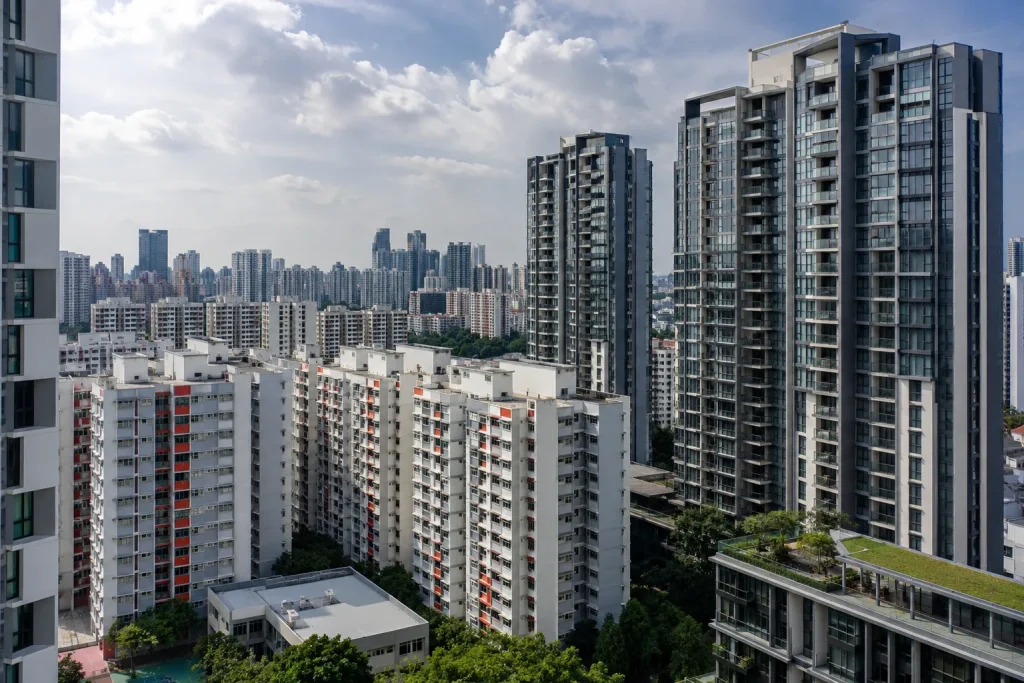
For generations, the formula for making it in Singapore was simple and straightforward: you graduate, get a stable job, buy an HDB flat, upgrade to a condo if you can afford it, and let property secure your old age.
But things have changed. Many young Singaporeans are realizing a harsh truth, that locking up every single dollar into a 30-year residential mortgage might actually be the very thing keeping them trapped.
If your entire plan for the future relies on a single property slowly going up in value over three decades while you bleed interest to the bank, you aren’t building freedom. You might just be building a very expensive trap. To truly understand how to break out of this cycle, we need to look past our local obsession with standard residential buying and talk about how to use property for investing for early retirement today.
What It Means to Be in the Rat Race
To understand the rat race’s meaning, just look at the typical corporate loop, where you work a high-stress job to pay for an expensive lifestyle, which means you have to keep working that high-stress job just to pay the bills. The rat race is a cycle where your expenses grow as fast as your salary, leaving you with zero breathing room.
When people say they want to escape the rat race, it means reaching a point where working finally becomes a choice, and no longer a survival requirement.
In Singapore, the biggest fuel for this treadmill is often the housing market. When a young couple stretches their budget to the absolute limit for a home loan, they tie themselves to a 30-year bank liability.
However, to pay off that massive debt, they can’t afford to take career risks, switch to a lower-paying passion, or take a career break. They are locked into the system.
Why the Traditional Property Route is Failing Next-Gen Investors
The most common comeback to this is the rental income retirement strategy. The idea may sound great on paper: buy a second property, rent it out to a family, and live off the rent money.
While this worked beautifully for our older’ generation when Singapore was growing rapidly, today’s market is a whole different game due to several factors:
- Strict Government Rules: The government has put intense cooling measures in place to keep property prices from spiraling. For instance, the Additional Buyer’s Stamp Duty (ABSD) for a Singapore citizen buying a second property sits at a whopping 20%. This makes buying multiple traditional residential properties incredibly capital-inefficient.
- The 99-Year Countdown: For HDB flats, lease decay is a reality. As a flat gets past the 40 or 50-year mark, it becomes harder to sell because bank loans and CPF usage for the next buyer get restricted.
- Low Net Rental Yields: If you buy a standard $1.5 million condo and rent it out to a single family, your net rental yield after paying for maintenance, property taxes, interest rates, and agent fees often hovers around a meager 2% to 3%. That barely keeps up with inflation.
The Active Capital Model (Coliving)
Does this mean property is dead as a wealth-building tool? Absolutely not. Real estate still does and will remain one of the greatest wealth generators because of safe leverage (using the bank’s money to grow yours).
But investors are changing how they utilize the asset. Instead of buying, holding, and waiting for capital appreciation, they are repurposing property into high-yield active models, such as coliving.
What is the Coliving Model?
Practically, coliving is repurposing a whole apartment with individual rooms for rent to different tenants, who most of the time are young locals, expats, students, or even young couples.
The Pros: High Cash Flow and Agility
- Higher Yields: While a traditional rental might bring in $4,500 a month from a single family, that same unit repurposed into a 4-bedroom coliving space can yield $1,500 to $1,800 per room, totaling $6,000 to $7,200 a month. This can push your rental yields up to 5% or 7%.
- Mitigated Vacancy Risk: If a single family moves out of your traditional rental, your income drops to zero percent instantly. In a coliving property, if one tenant leaves, you still have three other rooms paying rent, keeping your cash flow positive.
- No ABSD (Via Asset-Light Models): Investors don’t even need to own the property to cash in on coliving. Through master leasing (renting a property from a landlord, renovating it, and legally sub-letting it as coliving), you can build a massive cash-flowing property portfolio without paying a single cent of ABSD or locking yourself into a 30-year bank loan.
The Cons: The Realities of Active Management
- It is NOT Passive Income: Coliving is essentially hospitality. You are managing multiple personalities, handling room turn-overs, fixing Wi-Fi issues, and coordinating cleaning services. It takes active systems and effort.
- Higher Upfront Setup Costs: To attract premium coliving tenants, the property needs to look beautiful. You have to invest in high-quality furnishings, interior design, and utilities up front.
- Regulatory Compliance: Singapore has strict laws regarding minimum lease terms (minimum 3 consecutive months for private residential properties) and maximum occupancy limits (usually capped at 6 unrelated occupants). You must know the law inside out; cutting corners can ruin your business.
What is the Advantage of Saving and Investing Early?
Whether you choose a liquid stock portfolio or a high-yield coliving property business, the core foundational rule remains identical: you must start early.
Saving early isn’t about giving up your social life. Quite the contrary, It’s about buying your future time. Even when inflation numbers look low, day-to-day costs in Singapore always creep up. Leaving your money in a bank account can lose its purchasing power over time. That is why saving early only works if you start investing early too.
When you look at what is the advantage of investing early for retirement, the biggest superpower you have is time. When you start in your 20s or early 30s, you have a long runway to test strategies, build cash flow engines, and let compound returns take over.
If you use your early years to build a high-yielding coliving portfolio, the velocity of your wealth accelerates. The excess cash flow generated from your properties can be aggressively funneled into liquid global equities or used to max out your CPF Special Account, creating a multi-layered financial safety net that traditional home buyers could only dream of.
Breaking the Cycle for the Next Generation
There is another major reason to look beyond the traditional property path: Singapore’s changing population.
Recent demographic data confirms that Singapore is aging faster than almost any other country, with projections showing that 1 in 4 Singaporeans will be over the age of 65 by 2030.
This puts a massive strain on the “sandwich generation”, where young adults have to financially support both their aging parents and their own children at the same time. If your entire retirement plan is tied up in the walls of your own residential house, you run a high risk of needing a monthly allowance from your kids in the future.
The real benefits of saving for retirement early are about family, too. By shifting your estate strategy toward high-yielding cash flow assets early in life, you give your future children the ultimate gift: the freedom to live their own lives without the financial burden of taking care of you.
A Balanced Game Plan for Smart Investors
Achieving true financial freedom in a hyper-modern metropolis like Singapore requires deliberate goal setting for investors who know how to build a balanced, resilient ecosystem.
- Your CPF Baseline: This is your risk-free floor. It ensures you have basic food and shelter covered via CPF LIFE after age 65.
- Your High-Yield Property Engine: Instead of letting capital sit dormant in a traditional 30-year home equity loan, you deploy capital into active strategies like coliving or commercial spaces that bring in 5% to 7%+ net yields right now. This cash replaces your active salary, helping you escape the rat race early.
- Your Liquid Assets: You take the excess profits from your cash-flowing real estate and automate investments into broad-based global ETFs. This gives you high long-term growth and ultimate liquidity.
Planning for retirement in Singapore needs to be about more than just hoarding pennies and waiting for your residential property value to double. The market has grown up, and the old formulas don’t work the same way anymore.
Real estate is still one of the most powerful wealth-creation tools available in Singapore, but only if you treat it as an active business rather than a passive savings account. The prize of investing for early retirement isn’t really about the fancy things you can buy when you are old, but the choices you get to make when you are 35, 45, even 55.
Ready to learn how to actively structure your real estate portfolio for high cash flow? Secure your seat at Proptiply Workshop today.