
What Is Co-Living Investment in Singapore?
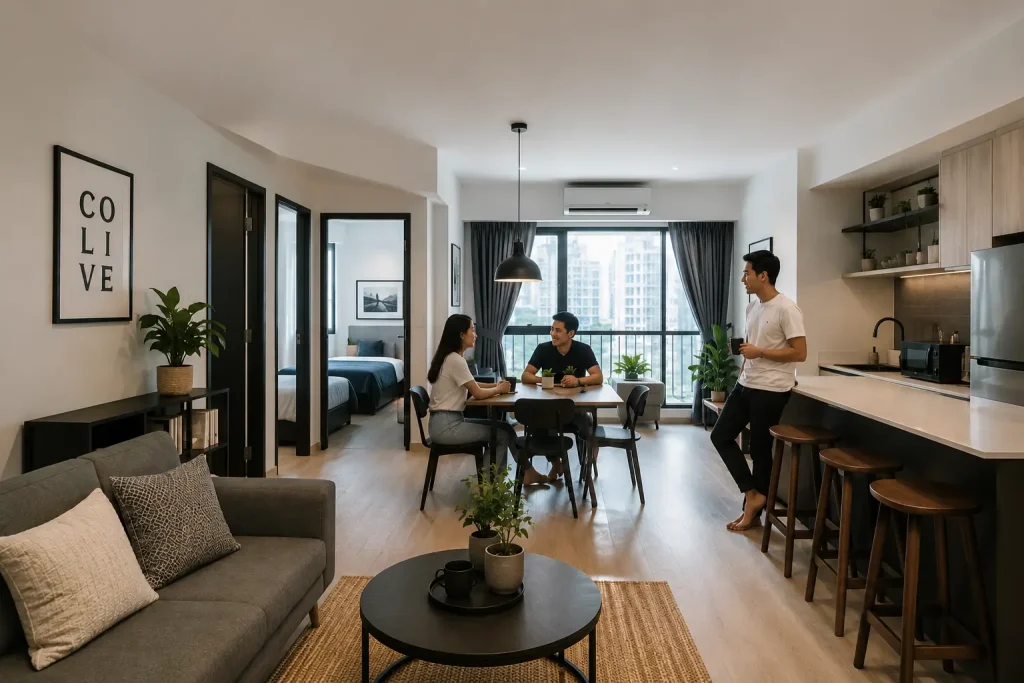
Co-living investment refers to a property strategy where an investor — or an operator — takes a large residential unit, furnishes and optimises it for shared living, and rents out individual rooms to multiple tenants. Each tenant gets a private bedroom but shares communal spaces like the kitchen, living room, and bathrooms.
In Singapore, this model has grown rapidly, especially among young professionals, foreign workers, and digital nomads who want affordable housing without long-term lease commitments. As a co living investment singapore strategy, it taps into a structural imbalance: demand for affordable, flexible rooms consistently outpaces supply.
Want a deeper look at the concept? Read our full guide: What Is Co-Living? A Complete Guide for Singapore Investors.
Why Co-Living Investment Is Gaining Traction
Singapore’s property market is one of the most expensive in Asia. Buying a second private property now triggers Additional Buyer’s Stamp Duty (ABSD) of up to 20% for Singapore Citizens and 30% for Permanent Residents, making traditional buy-to-let investment increasingly capital-intensive. Co-living sidesteps this barrier entirely.
Here is why more investors are paying attention to coliving investment right now:
- Higher rental yield per square foot compared to single-tenancy leases
- Lower capital barrier, you do not need to own a property to start
- Consistent demand from expats, young professionals, and students
- Scalable, one successful unit can be replicated across multiple properties
- Positive cash flow potential from month one when structured correctly
What Is the Valuation of Co-Living?
This is one of the most searched questions around coliving investment, and the answer depends on whether you’re valuing a co-living business, a co-living operator, or an individual unit’s investment returns.
At the Unit Level
For a single co-living property investment, valuation is typically based on its net operating income (NOI), the total rental income minus operating expenses like rent, utilities, furnishing, and management fees. Investors use a capitalisation rate (cap rate) to determine the income value of the asset. In Singapore, co-living units in prime districts can achieve gross yields of 6%–10%, compared to the typical 2.5%–3.5% for conventional residential leases.
At the Business or Operator Level
Globally, co-living operators are valued similarly to real estate investment trusts (REITs) or hospitality businesses. Factors that influence valuation include:
- Occupancy rate, consistently above 85% is considered strong
- Average revenue per room (ARPR)
- Lease duration and tenant retention rates
- Number of units under management
- Brand strength and community offerings
Well-run co-living businesses in Singapore have attracted institutional interest precisely because the metrics are more transparent and predictable than traditional residential property. When you learn how to invest in co living singapore through the right framework, you are essentially building a hospitality-grade income business, one room at a time.
How The Rent-to-Rent Model Works
The most accessible entry point into co living property investment in Singapore does not require purchasing a property. Instead, you lease a large unit from a landlord at a fixed monthly rent, reposition it as a co-living space, and sublet individual rooms at a premium.
Here is the core logic:
- You sign a lease on a 4–6 bedroom HDB or condo unit
- You furnish and optimise each room for co-living tenants
- You market and fill the rooms at per-room rates
- The total room rental income exceeds your master lease cost
- The spread, after utilities, management, and maintenance, is your cash flow
This is the model Proptiply specifically trains students on. It removes the need for a massive downpayment, avoids ABSD exposure, and creates real, recurring income without owning the underlying asset.
If you’re considering scaling this into a business, sign up for our Coliving Bootcamp
How to Choose the Right Property for Co-Living
Not every large flat makes a good co-living space. The right property selection is where experienced investors separate themselves from those who struggle. Here is what to look for when learning how to invest in coliving spaces:
Location
- Proximity to MRT stations (ideally within 10 minutes’ walk)
- Near business districts, universities, or industrial hubs where your tenant base lives and works
- Districts 10, 11, 14, 15, and 19 have historically shown strong co-living demand
Unit Configuration
- 4–6 bedrooms are the sweet spot — more rooms means more income per lease
- At least 2 bathrooms to maintain tenant comfort
- Sufficient common area for a liveable, community-oriented setup
Lease Terms
- Negotiate a longer master lease (2–3 years) to lock in rental cost stability
- Ensure the landlord permits subletting — get this in writing
- Factor in a rent-free renovation period when negotiating
Running the Numbers: A Simple Cash Flow Example
Let’s make co living investment singapore concrete. Here is a simplified model for a 5-bedroom condo unit in District 14:
| Item | Monthly (SGD) |
| Master Lease (paid to landlord) | $3,500 |
| Utilities (electricity, water, WiFi) | $400 |
| Cleaning & Maintenance | $200 |
| Management / Miscellaneous | $300 |
| Total Monthly Costs | $4,400 |
| 5 Rooms × $1,600/room | $8,000 |
| Net Monthly Cash Flow | $3,600 ✅ |
This example is illustrative. Actual figures depend on the unit, district, furnishing quality, and tenant mix. The key takeaway: co living property investment can generate meaningful cash flow even at conservative room rates.
Legal & Regulatory Considerations in Singapore
Understanding the rules is non-negotiable before you start. Singapore’s Urban Redevelopment Authority (URA) and Housing & Development Board (HDB) have specific guidelines governing subletting.
For HDB Flats
- Only Singapore Citizens and Permanent Residents may rent out HDB rooms
- You must obtain HDB’s approval before subletting
- Rental occupancy is capped — typically no more than 6 non-owners per flat
- Minimum subletting period is 6 months per tenant
For Private Condominiums
- No government approval needed to sublet rooms
- Review the tenancy agreement — some landlords restrict subletting
- Check condominium by-laws for rules on guest frequency or short-term stays
Short-Term Rental Restriction
Singapore does not permit residential properties to be rented for fewer than 3 consecutive months under standard URA rules. All co-living tenancies must meet this minimum. This keeps your operation on the right side of the law and protects your investment.
Risks to Know Before You Start
No investment strategy is without risk. Being realistic about the downside is part of learning how to invest in co living singapore responsibly.
- Vacancy risk: If multiple rooms sit empty simultaneously, your cash flow turns negative quickly
- Tenant management: Co-living means managing multiple relationships, disputes, and turnover
- Landlord risk: Some landlords do not permit subletting — always verify upfront
- Regulatory changes: Singapore’s rental rules evolve, and new restrictions could affect your model
- Furnishing costs: Initial setup — beds, appliances, WiFi, décor — typically costs $5,000–$15,000 depending on the unit size and quality tier
Most of these risks are manageable with the right training, a solid tenant screening process, and a clear financial buffer. This is precisely why structured education — not trial and error — is the smarter entry point.
How to Start Your Co-Living Investment Journey
Here is a practical roadmap for anyone serious about co living singapore investment:
- Educate yourself — understand the model, the numbers, and the regulations before signing any lease
- Define your strategy — rent-to-rent operator, passive investor, or property manager?
- Scout locations — focus on transport-linked districts with strong rental demand
- Run your numbers — model best case, realistic, and worst-case occupancy scenario.
- Negotiate a master lease — secure a landlord who permits subletting and agree on terms in writing
- Set up and furnish — invest in quality furnishing that attracts and retains good tenants
- Market your rooms — use co-living platforms, Facebook groups, and property portals
- Manage or outsource — decide whether you self-manage or engage a property management service
The fastest way to compress this learning curve is to learn directly from practitioners who have already built co-living portfolios in Singapore — which is exactly what Proptiply’s Co-Living Bootcamp delivers.
Frequently Asked Questions
Is co-living investment legal in Singapore?
Yes — provided you follow URA and HDB subletting rules. For private condos, no government approval is required, but you must ensure your master lease permits subletting. For HDB flats, HDB approval is mandatory.
Do I need to own a property to invest in co-living?
No. The rent-to-rent model means you lease a property from a landlord and sublet rooms. Your profit comes from the spread between the master lease cost and the total room rental income — no property ownership required.
How much money do I need to start a co-living investment in Singapore?
Startup costs typically include a rental deposit (2 months) and furnishing costs ($5,000–$15,000). A realistic starting capital for a well-furnished 4–5 bedroom unit sits between $20,000–$35,000 depending on the district and quality tier you target.
What is co living investment Singapore’s average yield?
Gross yields of 6%–10% are achievable for well-run co-living units, compared to 2.5%–3.5% for conventional single-tenancy leases. Net cash flow depends on occupancy rates, expense management, and room pricing strategy.
What is the difference between co-living and a boarding house?
Co-living positions itself as a lifestyle product — curated communities, quality furnishing, and flexible tenancies. Boarding houses are typically lower-cost, less managed, and legally classified differently. Co-living targets professionals and expatriates who value experience alongside affordability.
How do I learn more about starting a co-living business in Singapore?
You can join Proptiply’s Co-Living Bootcamp to learn directly from practitioners.