The BRRR strategy, which stands for Buy, Rehab, Rent, Refinance, Repeat, is a property investment framework that aims to recycle the same capital across multiple properties.
You buy a property below its potential market value, improve it to increase its value and rental appeal, rent it out, refinance based on the property’s new value, and use the released capital toward your next investment.
The strategy is common in markets where investors can refinance an improved property and access part of the equity they have created.
Singapore presents a different environment. Residential property purchases are subject to significant stamp duties and borrowing restrictions, while the rules around equity withdrawal can limit how closely you can follow the classic BRRR model.
We need to know which version of BRRR fits Singapore’s property rules, financing options and property types. Commercial and industrial properties can offer a different route because they are treated as non-residential assets for stamp-duty purposes, while residential investors need to structure the strategy much more carefully.
What Is the BRRR Strategy?
The BRRR strategy is a five-step property investment method that turns value creation and refinancing into a way to grow a property portfolio with less new cash at every purchase.
The basic idea is as followed:
Buy → Rehab → Rent → Refinance → Repeat
Instead of buying a property, holding it indefinitely and waiting for market appreciation, you look for an asset where your actions can increase its value.
The improvement can come from renovation, better space planning, stronger rental income, correcting an underperforming layout, or simply buying the property at a sufficiently low price.
The aim is to create a gap between your total capital invested and the property’s new market value.
For example, say you buy a property for S$1 million and spend another S$80,000 on renovations. If the property is later worth S$1.45 million, there is S$370,000 between your total S$1.08 million investment and the new property value.
But that does not mean you can withdraw S$370,000. The bank will look at how much the property is worth, how much it is willing to lend against it, your existing loan and whether you can afford the new loan.
That is what makes BRRR different from simply renovating a property. The renovation needs to create enough value and rental income for you to refinance the property and recover some of the money you put in.
1. Buy: Find a Property Below Its Potential Value
The first step is to buy an undervalued property where there is a credible opportunity to increase its value.
But it does not mean we’re looking for the cheapest property available. The better target is a property where the purchase price leaves enough room for improvement, costs and profit.
Potential opportunities can include:
- Properties priced below comparable transactions
- Distressed or motivated sales
- Properties with inefficient layouts
- Units with outdated interiors
- Underperforming properties with weak rental positioning
- Properties where better space planning could increase rental income
What we need to calculate is the expected all-in cost, not just the purchase price.
That means considering the downpayment, buyer’s stamp duty, legal fees, renovation or fit-out costs, financing costs, vacancy periods and other transaction expenses before deciding that a property is genuinely below market value.
For further guidance, you can read our page on how to find below market value (BMV) property.
2. Rehab: Increase the Property’s Value and Rental Potential
The rehab stage involves making targeted improvements that can increase the property’s market value, rental income, or both.
You’d want to spend money on changes that tenants value or future buyers can recognize.
For a residential property, that might involve improving the layout, adding useful storage, refreshing worn interiors or making better use of limited floor space. For commercial or industrial property, the work could involve partitioning, lighting, air-conditioning, electrical systems or a more functional layout for the intended tenant.
The target is the property’s After-Repair Value (ARV), which is an estimate of what the property could be worth after the planned improvements.
A simple way to think about it is:
Potential value created = ARV − purchase price − renovation and other acquisition costs
3. Rent: Stabilize the Property With Rental Income
The rental stage is where you find tenants and start earning income from the property.
A good BRRR deal should not rely only on the property becoming more valuable in the future. The rent should be high enough to cover the property’s regular costs, such as the loan payment, maintenance, property tax, management fees and periods when the property may be vacant.
The goal is to have steady rental income that helps pay for the property while you own it. A property that consistently earns good rental income is also more attractive to investors and can support a stronger valuation, especially for commercial and industrial properties.
Of course, the rent still needs to be reasonable for the area, property type, condition and type of tenant you are targeting. If the asking rent is far above what similar properties can achieve, it may be difficult to find and keep a tenant.
4. Refinance: Get Some of Your Money Back
The refinance stage is where you try to get back some of the money you invested in the property.
Once the property has been renovated and rented out, you can have it valued again. If its value has increased, you may be able to take a larger loan against the property and use part of the new loan to pay off your old loan. The money left over is the capital you can potentially use for your next investment.
For example, if you still owe S$750,000 on a property that is now worth S$1.45 million, a bank may be willing to lend more based on the property’s new value. The amount you can actually borrow will depend on the bank’s lending limits, your income, existing debts and the property itself.
So, a higher property value does not mean you can automatically take out the full amount of value you have created.
Singapore also treats residential and non-residential properties differently.
Private residential properties can have equity term loan facilities, but there are restrictions on existing property loans and how the money can be used.
For example, SBI Singapore requires borrowers taking an equity term loan to declare that the funds will not be used as the downpayment for another residential property in Singapore.
You cannot simply assume that you can refinance one residential property and use the money to buy another one. The financing structure needs to follow Singapore’s property and lending rules.
5. Repeat: Reinvest the Recovered Capital
The final step is to use the money you recover from the first property to help fund your next investment.
For example, you might put S$300,000 of your own money into a property. After renovating it, renting it out and refinancing it, you may be able to recover a large part of that S$300,000. Instead of leaving the money tied up in the first property, you can potentially use it toward the next property.
The BRRR cycle then looks like this:
Property 1 → Buy → Renovate → Rent → Refinance → Recover capital → Property 2 → Repeat
The idea is to make your money work across multiple properties instead of putting new savings into every purchase.
However, you should not assume that every property will allow you to recover all of your original capital. The property’s new value, rental income, loan amount and financing costs will all affect how much money you can get back.
A good BRRR investment should therefore make sense on its own. You should not rely on a future refinance at a much higher valuation just to make the numbers work.
Does the BRRR Method Work in Singapore?
BRRR can work in Singapore, but it needs significant adaptation because property taxes, lending rules and equity-withdrawal restrictions can prevent investors from refinancing one property to fund the next.
In Singapore, residential investors face substantial Additional Buyer’s Stamp Duty (ABSD), borrowing limits and restrictions around the use of equity term loans.
The biggest issue for residential investors is the Additional Buyer’s Stamp Duty (ABSD). Buying additional residential properties can come with a significant tax bill, which reduces the amount of money you have available to invest in the next property.
For example, a Singapore Citizen currently pays 20% ABSD on a second residential property and 30% on a third or subsequent property. Singapore Permanent Residents pay 30% on a second property and 35% on a third or subsequent property, while foreigners generally pay 60% on residential property purchases.
See this page to see the updated ABSD rates.
MAS also sets limits on how much you can borrow against a residential property. So, even if your property has gone up significantly in value, the bank may not let you borrow enough to recover all of the equity you have built up.
The amount you can borrow depends on factors such as the property’s value, the loan-to-value limit, your income, existing debts and other borrowing rules.
These costs can make it difficult to keep recycling the same capital into additional residential properties.
There is also a difference between being able to refinance a property and being able to use that money to buy another property.
A private-property owner may be able to borrow against the property’s value under certain conditions, but lenders can place restrictions on how the money is used. This is particularly important if you plan to use the money to purchase another residential property.
As a result, Singapore investors generally look at BRRR in two ways:
- Residential BRRR: The basic strategy needs to be adjusted to work within Singapore’s financing, ownership and tax rules.
- Commercial and industrial BRRR: These properties have different tax and financing rules, which can make the capital-recycling part of BRRR easier to structure.
The key idea remains the same. Buy at the right price, increase the property’s value, generate rental income, recover some of your capital where possible, and use that capital carefully for the next investment.
How to Adapt the BRRR Strategy for Singapore
The most suitable approach depends heavily on the type of property you invest in.
Residential investors need to work around Singapore’s ABSD and financing rules, while commercial and industrial investors operate under a different set of property and financing rules.
This creates two broad approaches to BRRR in Singapore.
Strategy A: Adapt BRRR for Residential Property
A Singapore residential BRRR strategy needs to focus heavily on buying well, improving rental income and planning the financing structure before the purchase.
The biggest opportunity is to create value at the point of purchase. Finding a property that is genuinely below market value gives you a stronger starting position and reduces the amount of value that needs to be created through renovation.
This is where identifying below-market-value property in Singapore becomes important. A low asking price alone is not enough. You need to understand recent comparable transactions, the property’s condition and its potential rental income to determine if there is a genuine opportunity.
Planning the ownership and financing structure is equally important. If your long-term goal is to own several residential properties, you need to understand how your first purchase will affect your ability to make the second one.
Some investors explore structures such as decoupling or single-party ownership to manage future ABSD exposure. These arrangements have their own legal, tax and financing considerations, so they should be assessed carefully.
If you want a structured approach to analysing and executing this type of strategy, the Proptiply Residential Acceleration Program Bootcamp provides a more detailed framework for Singapore residential property investing using safer BRRR strategies.
Strategy B: Use BRRR for Commercial and Industrial Property
Commercial and industrial property can make the BRRR model easier to structure because the rules governing these properties are different from residential property.
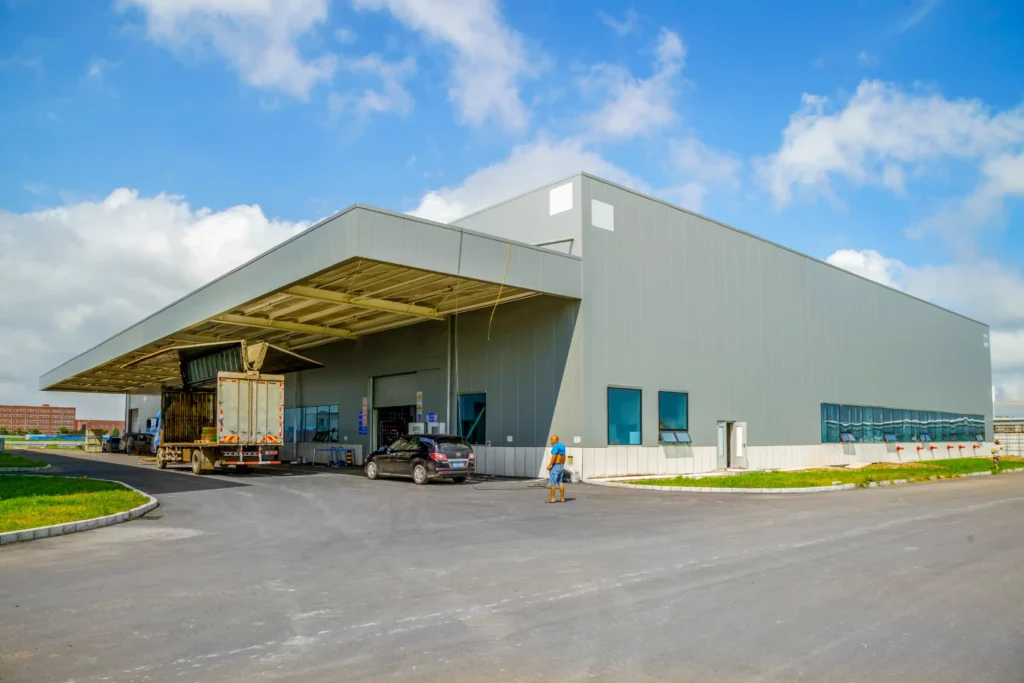
Common examples include strata offices, retail units, shophouses and B1 or B2 industrial properties.
One major difference is that commercial and industrial properties are not subject to ABSD, although other taxes, duties and transaction costs can still apply. This removes one of the major costs that can make residential BRRR difficult to repeat.
Commercial property can also provide access to equity term loan facilities, subject to the lender’s requirements. This can make it easier to use an increase in property value to recover some of the capital invested in the project.
The value-creation strategy can also look different.
For example, an underperforming B1 industrial unit may have an inefficient layout, outdated interiors or features that make it less attractive to potential tenants. You could improve the space with a suitable fit-out, better lighting, air-conditioning or more efficient partitions, then lease it to a suitable business tenant.
Once the property is producing stronger rental income, its income performance can support its investment value. You can then explore refinancing based on the property’s new position.
Commercial and industrial BRRR comes with its own risks, including vacancy periods, tenant requirements, financing terms, permitted-use restrictions and potentially higher renovation costs. These need to be included in the numbers before you commit to a deal.
If you’re interested in learning how to analyse and structure these opportunities, the Proptiply Commercial & Industrial Acceleration Bootcamp focuses specifically on commercial and industrial property investing in Singapore.
BRRR vs. Buy-and-Hold vs. Property Flipping
BRRR, buy-and-hold and property flipping all aim to make money from property, but they use your capital in very different ways.
With buy-and-hold, you usually leave your capital in the property and continue collecting rent while waiting for long-term appreciation.
With flipping, you sell the property after improving it and take your profit when the sale is completed.
With BRRR, you aim to keep the property and its rental income while recovering part of your original capital through refinancing.
That makes BRRR attractive to investors who seek to build a larger portfolio without having to save a completely new downpayment for every property.
However, it also means taking on additional debt, so the strategy needs to be supported by realistic rental income and conservative financing assumptions.
In Singapore, the choice of strategy also depends heavily on the property type. As mentioned previously, residential investors face additional tax and financing considerations, while commercial and industrial properties can provide a different set of opportunities.
Why Professional Advice Is Beneficial for a Singapore BRRR Deal
A property may look cheap but have weak rental demand. Another may offer strong rental income but require too much renovation. A third may have excellent potential but leave you with too little borrowing capacity after refinancing.
You need to look at the whole picture before committing your money. A proper deal analysis should consider:
- Purchase price
- Total renovation and fit-out costs
- Financing and interest costs
- Taxes and transaction costs
- Expected rental income
- Vacancy and operating expenses
- Estimated value after improvements
- Potential refinance amount
- How much capital you can realistically recover
- How the next purchase would be funded
If the numbers only work under the assumption that the property will achieve an unusually high valuation or that you will recover every dollar invested, the deal is probably too risky.
A safer approach is to work with conservative assumptions and leave room for unexpected costs or a slower-than-expected rental period.
For investors who want help assessing a specific opportunity, personalized property consulting can provide support with deal analysis, financing structure and execution without relying on a commission-based property sale.
Frequently Asked Questions
Is cash-out refinancing legal for residential properties in Singapore?
Residential property owners may be able to borrow against their property under certain conditions, but there are restrictions on the loan and how the funds can be used.
The amount you can borrow depends on the property’s value, applicable lending limits and your financial situation. You also cannot assume that money released from a residential property can be used freely to fund another residential purchase.
Do you have to pay ABSD when using BRRR in Singapore?
ABSD applies when you buy an additional residential property, subject to the applicable rates and any exemptions or remission that may apply.
This is one reason residential BRRR can be difficult to repeat. Commercial and industrial properties are generally not subject to ABSD, although other transaction costs and taxes may still apply.
How do banks determine the value of a renovated property?
Banks generally rely on a professional property valuation and their own lending assessment rather than simply accepting the amount you spent on renovation.
The valuation can take into account factors such as comparable property transactions, the property’s location and condition, its remaining lease, rental income and the quality and usefulness of improvements.
How much money can you recover through a BRRR refinance?
The amount you can recover depends on the property’s new value, the applicable loan limit, your existing loan balance and the lender’s assessment.
A higher valuation can give you more borrowing capacity, but it does not mean that all of the equity you created will become available as cash.
Is BRRR better than buying and holding property?
BRRR can be more capital-efficient than traditional buy-and-hold investing, but it also involves more financing and execution risk.
Buy-and-hold investors generally leave their capital in the property and work on rental income and long-term appreciation, while BRRR is more about creating value and recovering capital so they can move into another investment.