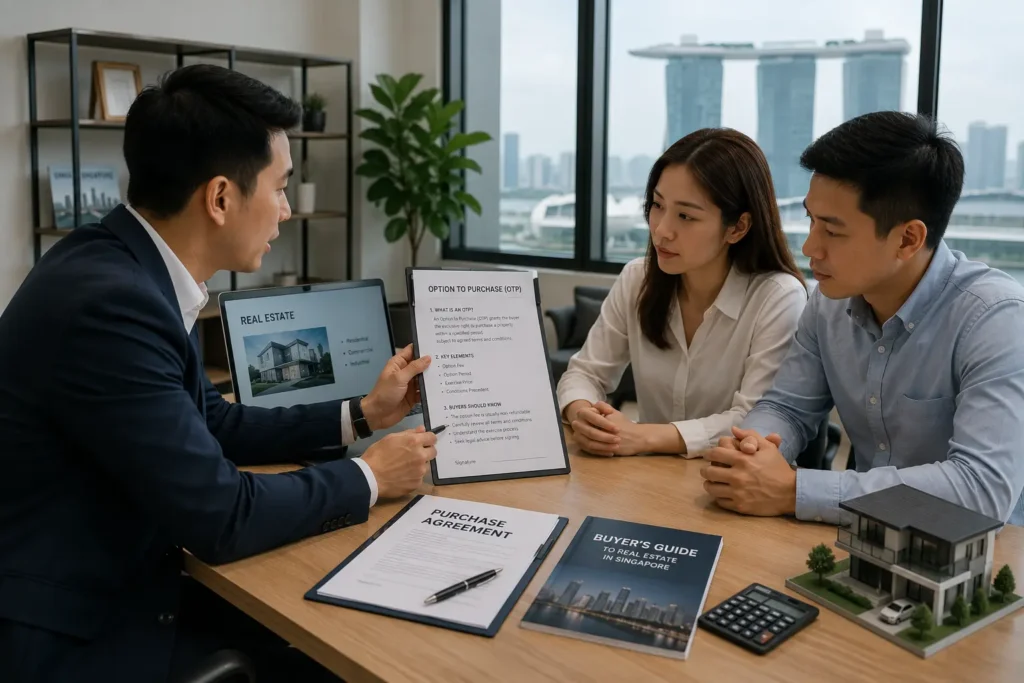

Quick summary. Singapore property can be bought directly as a physical unit or indirectly through S-REITs and REIT ETFs. Physical property offers leverage and control, though it comes with heavy stamp duties and a slow exit. S-REITs let a beginner start small and typically pay dividend yields between 4% and 8% a year. The right path depends on capital, residency status, and how hands-on an investor wants to be.
Is Singapore Property Still a Good Investment in 2026
Singapore property is still considered a solid long-term asset in 2026, though the growth pattern looks different from a few years back. The URA Private Property Price Index has settled into smaller, steadier gains instead of the sharp yearly jumps seen right after the pandemic. At the same time, borrowing costs have eased. Fixed home loan packages are now priced between roughly 1.4% and 1.8% per annum, a level not seen in about three years.
This mix matters for anyone weighing their first purchase. Cheaper loans make a mortgage easier to carry month to month. But cooling measures such as the Additional Buyer’s Stamp Duty and the Total Debt Servicing Ratio are still firmly in place, so leverage and the ability to own several properties stay tightly controlled by policy.
Two schools of thought exist among investors here. The older belief holds that Singapore property always climbs, so a buyer should purchase as much as affordable and hold. That view worked when prices rose every year without exception. A newer, more diversified approach has since taken hold, where investors pair a home or rental unit with index funds, bonds, or S-REITs instead of putting all their capital into one illiquid asset.
Neither path is wrong by itself. Someone with steady income and a long time horizon can still do well buying a physical unit. Someone who wants liquidity, a lower entry cost, or property exposure without debt might start with S-REITs instead.
A team like Proptiply works through this exact decision with clients every week, matching the strategy to the person rather than the other way around. The sections below break down both paths, the tax rules, the financing limits, and a step-by-step framework.
How Physical Property Investment Generates Returns in Singapore
Physical property in Singapore generates returns through two channels: capital appreciation and rental income, and most investors lean toward one over the other depending on their goals.
Capital appreciation is the rise in a property’s market value over time, and it varies by district, project age, and market cycle rather than following one fixed pattern. Singapore’s limited land supply and steady population growth have historically supported price growth over a 5 to 10 year horizon, though the pace differs sharply between segments.
Rental yield measures the income a property produces relative to what it cost. Gross rental yield is annual rent divided by purchase price, while net rental yield subtracts costs like maintenance, property tax, and agent commission before dividing.
As a general pattern, units in the Outside Central Region tend to post higher gross yields since prices sit lower relative to achievable rent, while units in the Core Central Region often show lower yields but draw steadier demand from expatriate tenants working nearby.
A common path for first-time buyers is asset progression. A couple buys an HDB flat, waits out the Minimum Occupation Period, then sells it and uses the proceeds plus fresh loan capacity to move into a private condominium, sometimes keeping that condo as a rental unit later.
This works best when timed around financing rules, such as clearing an outstanding mortgage before a second purchase triggers a lower Loan-to-Value limit. Fixed mortgage rates sitting between 1.4% and 1.8% in 2026 have made this kind of upgrading cheaper than it was during the higher rate years before.
Timing an asset progression move well takes more than checking a mortgage calculator. If you want a structured way to plan this transition, you can join a guided program like Proptiply’s Residential Acceleration Program, which walks you through the sequencing, financing, and district selection involved in moving from a first home into an investment-grade unit.
Regulatory Rules to Buying Property in Singapore in 2026
Singapore controls property demand through a set of cooling measures, and the biggest one for buyers is the Additional Buyer’s Stamp Duty. ABSD sits on top of the standard Buyer’s Stamp Duty, and the rate depends on residency status and how many residential properties a buyer already owns.
| Buyer Profile | 1st Property | 2nd Property | 3rd Property |
| Singapore Citizen | 0% | 20% | 30% |
| Permanent Resident | 5% | 30% | 35% |
| Foreigner | 60% | 60% | 60% |
These rates have held since the April 2023 cooling measure round and remain unchanged through 2026, according to IRAS.
Financing is capped through two more rules.
- Total Debt Servicing Ratio. Total monthly debt, including the new mortgage, car loans, and credit cards, cannot go beyond 55% of gross monthly income, a limit confirmed by Redbrick’s 2026 home loan guide.
- Loan-to-Value limit. Banks lend up to 75% on a first housing loan. This drops to 45% on a second loan and 35% on a third, if an earlier mortgage is still outstanding.
- Seller’s Stamp Duty. Selling within the first year after purchase costs 16% of the price, tapering to 12% in year two, 8% in year three, and 4% in year four, based on IRAS rules updated in July 2025. No SSD applies past the four year mark.
These three rules shape almost every decision in a Singapore property purchase, from how many units a buyer can hold to how soon they can sell without a penalty. Getting a personalised read on how ABSD and TDSR apply to a specific income and property count is where a 1-on-1 consultation with Proptiply tends to save buyers from an expensive miscalculation.
Indirect Real Estate Investment Through S-REITs
What Are S-REITs and How Do They Work?
S-REITs are Singapore-listed trusts that own and manage income-producing property, giving ordinary investors a way to buy a share of that property through the stock exchange. Instead of purchasing a whole unit, an investor buys units of a trust that holds several properties and collects a share of the rental income as dividends.
Singapore law requires REITs to distribute at least 90% of taxable income to unitholders each year to keep their tax-transparent status, a rule set out by the Monetary Authority of Singapore. This is what makes S-REITs appealing to income-focused investors, since the trust is required to pay out most of its earnings rather than hold onto them.
S-REITs spread across several property sectors, and each one responds to a different part of the economy.
For a beginner, sector choice matters as much as picking the individual trust. A retail REIT tied to malls moves with consumer spending, while an industrial REIT tied to logistics warehouses moves with supply chain demand.
Average dividend yields across S-REITs generally sit between 4% and 8%, according to the REIT Association of Singapore, depending on interest rates and occupancy levels.
Investors curious about the industrial and logistics side specifically, including how warehouse and data center demand plays out in Singapore, can get a structured walkthrough through Proptiply’s Commercial and Industrial Program.
Buying into an S-REIT does not carry the same control as owning a unit outright. There’s no choosing tenants or setting rent. What an investor gets instead is a slice of a professionally managed portfolio, paid out as regular income, and tradable on the Singapore Exchange at any time during market hours.
REIT ETFs vs Direct REIT Investment
A REIT ETF gives exposure to a basket of S-REITs in one purchase, while direct REIT investment means buying units in a single trust. Both routes lead into the same underlying property sectors, but they differ in diversification and control.
Buying a single REIT, say one focused purely on industrial property, ties returns closely to that one sector and management team. A REIT ETF, such as the NikkoAM-StraitsTimes REIT ETF or the Lion-Phillip S-REIT ETF, holds a mix across office, retail, industrial, and healthcare trusts, so weakness in one sector gets balanced by strength in another.
REIT ETF is often the simpler starting point, since it removes the need to track individual trusts one by one. Someone chasing a bit more upside, and willing to review quarterly reports and occupancy rates, might prefer picking individual REITs instead.
Either way, both routes sit on the indirect side of property investment, offering rental-style income without a mortgage, a tenant, or an LDAU application.
Physical Property vs S-REITs
Physical property and S-REITs sit on opposite ends of the same market, one built on ownership and leverage, the other built on liquidity and low entry cost. The table below lays out how they differ across the factors that matter most to a first-time investor.
Let’s put this in perspective. A first-time buyer of a private condo priced at $1.5 million would need close to $375,000 for a 25% downpayment alone, before stamp duties are added.
An investor putting the same amount into a REIT ETF could buy in gradually, starting with a few thousand dollars, and still gain exposure to office towers, warehouses, and malls across Singapore. Average yields for S-REITs have run between 4% and 8% annually, according to the REIT Association of Singapore, depending on sector and prevailing rates.
Someone with steady income and a long horizon may prefer the leverage and control that comes with owning a unit. Someone who wants to start small, skip tenant headaches, or keep capital liquid may lean toward REITs instead. But, can you do both? Of course, many beginner investors end up holding both, a home for stability and REITs for income, rather than treating this as a single choice.
Weighing both options against a specific income, savings, and risk appetite is where things get personal, and this is why you might need Proptiply’s property consulting service to walk you through this exact trade-off, matching the mix of physical property and REITs to your actual financial power.
Hidden Costs That Reduce Property Investment Returns
A $250,000 rise in a property’s value does not equal $250,000 in profit, and this is one of the most common miscalculations beginner investors make. That number is a paper gain, and several ongoing costs chip away at it long before any cash reaches a bank account.
Bank interest is the first drag. Even at a fixed rate of 1.4% to 1.8%, interest adds up over a 25 or 30 year loan, and the full weight only shows once someone calculates total interest paid across the loan tenure rather than just the monthly instalment.
Maintenance and Conservancy fees are the second drag. These typically run from $300 to $800 or more a month depending on the development, according to PropertyGuru’s condo cost breakdown, and they continue whether the unit sits rented or empty.
Property tax and agent commission form a third layer. Selling a property usually costs 1% to 2% of the sale price in commission alone, on top of the property tax paid every year the unit is held.
There’s also the opportunity cost of tying up capital. A $400,000 downpayment put into a condo sits illiquid for years, earning nothing on its own outside of the property’s appreciation. The same amount invested in a diversified basket like the S&P 500 has historically compounded at a different pace over long stretches, with the added benefit of staying liquid.
None of this makes physical property a poor investment.
It means the math needs every cost included, not just the purchase price and eventual sale price. Working through this full picture with a professional is where our 1-on-1 consulting session tends to catch costs a first-time buyer would otherwise miss.
Step-by-Step Execution Framework to Buy Your First Property
1. Establish your residency status and capital profile
Citizenship status decides the ABSD rate and CPF eligibility before anything else gets calculated.
A Singapore Citizen pays 0% ABSD on a first property, a Permanent Resident pays 5%, and a foreigner pays a flat 60% regardless of how many units they already hold, based on IRAS rates. Citizens and PRs can use CPF for the downpayment and monthly instalments, while foreigners pay entirely in cash since they have no CPF access.
2. Calculate borrowing capacity
Cross-check gross monthly income against the 55% TDSR cap, then run the numbers again using the bank’s stress-test rate of around 4%, a buffer set higher than prevailing mortgage rates on purpose.
Banks use this to confirm a borrower can service the loan even if rates climb later. Someone whose income sits close to the ceiling may need a smaller loan quantum or a longer tenure to get approved.
3, Choose between capital growth or cash-flow yield
Smaller units in the Core Central Region tend to offer steadier rental demand from expatriate tenants, which suits investors chasing consistent income.
Outside Central Region properties often depend on regional development plans and infrastructure rollout, which suits investors betting on longer-term price growth.
Buyers exploring a cash-flow-first strategy, including shared and co-living setups, can find Proptiply’s Coliving Bootcamp useful for understanding how to structure a unit for multiple tenants and higher monthly yield.
4. Set up investment infrastructure
For property purchases, this means engaging a lawyer and securing a Home Financing Eligibility letter or bank pre-approval early. Anyone planning to add S-REITs alongside a physical purchase should also open a Central Depository account and pick a brokerage platform to hold the units.
Each step builds on the one before it. Skipping the residency check, for instance, can lead to a loan calculation based on the wrong LTV limit, only for the buyer to find their borrowing power is lower than expected once the bank runs its own assessment.
Frequently Asked Questions
Can Foreigners Invest in Singapore Residential Property?
Yes, foreigners can buy Singapore residential property, but they pay a flat 60% Additional Buyer’s Stamp Duty on the purchase, according to IRAS.
This rate applies whether it’s a first unit or a fifth, with no lower tier the way citizens and permanent residents get. Freehold landed homes are generally off limits to foreigners unless approved by the Land Dealings Approval Unit, with Sentosa Cove being one of the few exceptions granted case by case.
Many foreign investors who want Singapore property exposure without this tax burden choose commercial property, which sits outside ABSD rules, or buy into S-REITs through the stock exchange instead.
What Is the 99-to-1 Property Loophole and Is It Legal?
The 99-to-1 arrangement is a structure where one buyer holds 99% ownership of a property and a co-owner, often someone with no prior property and no ABSD obligation, holds the remaining 1%.
IRAS has cracked down on this practice, treating it as tax avoidance rather than a joint purchase, and has clawed back unpaid ABSD along with financial penalties in flagged cases. The intent behind the arrangement, using a co-owner’s clean profile to dodge a higher ABSD tier, is what triggered the crackdown, so this is a closed strategy rather than a workaround in 2026.
Is It Better to Clear an HDB Loan Before Buying a Second Property?
Yes, clearing an outstanding housing loan first restores the Loan-to-Value limit to 75% on the next purchase. If a first mortgage stays active when applying for a second property loan, the LTV cap drops to 45%, which means a much larger cash downpayment upfront.
This single decision, pay off the first loan or not, changes how much cash a buyer needs by a wide margin, so it’s worth running both scenarios through a mortgage calculator, or through a session with Proptiply’s consulting team, before committing to a second purchase.
How Much Money Do I Need to Start Investing in Singapore Property?
For physical property, a buyer should set aside at least 25% of the purchase price for the downpayment, plus stamp duties and legal fees on top. A $1.2 million condo, for example, would need close to $300,000 in downpayment alone before ABSD and BSD are added in. For S-REITs, the entry point is far lower, some brokerages allow investors to start with a few hundred dollars, making it a practical starting point for someone still building capital toward a physical purchase.
Why Do Rental Yields Differ So Much Across Singapore Districts?
Rental yields differ because purchase prices and rental demand don’t move in the same proportion across districts. Units in the Outside Central Region often carry lower price tags relative to achievable rent, which pushes gross yields higher on paper, while Core Central Region units usually command higher rent in absolute terms but come with a steeper purchase price, which compresses the yield percentage.
Tenant profile plays a role too, expatriate tenants tend to cluster around CCR and RCR units near business districts and international schools, which supports occupancy even when yields look lower.